Showing posts with label gratitude. Show all posts

Monday, November 19, 2018

The Grateful List for 2018

It’s no secret that the United States is going through a divisive, difficult time.  Human rights issues I keep thinking we should be long past are flaring up everywhere. People’s very identity is being questioned, challenged, denied. The divide between the rich and the poor is unspeakably wide, fomenting tragedy after tragedy. And old, medieval-era hatreds are sadly, not dead.

So what, then am I thankful for this Thanksgiving? The usual. People.

I’m grateful that Ruth Bader Ginsburg is back to work the day after she cracks ribs.

I’m grateful that my husband teaches, reaches, and defends Dreamers and other vulnerable students.

I’m grateful that my kids go to a diverse school where they are asked to engage real world problems and read a wide variety of texts—that their friends include Muslims and non-binary kids and immigrants and that they respect one anothers’ differences while learning to build bridges, not walls.

I’m grateful for young voters.

I’m grateful for artists—for painters and songwriters and musicians and storytellers—for everyone who makes us see new beauties and question old patterns.

I’m grateful for my cousin Carole, who passed away this fall, but who leaves behind a legacy of hard work improving literacy in her third grade classes, and for my aunt and uncle, her parents, who spent part of their retirement decorating her classroom, stocking her library, and reading at storytime—filling gaps in funding and staffing with service that so many classrooms in the US need.

I’m grateful for the firefighters, first responders, emergency crews, and neighbors who come together during disasters like the horrific wildfires California has endured this month. For the Auburn Girls Volleyball team, who lifted up the Paradise team, raising money, providing new uniforms and equipment but also food and companionship and solace.

I’m grateful for my family. Though I feel deeply for so many, my own life is marked by luck and serendipity and undeniable privilege. I’m grateful to be able to raise my kids as I like—in comfort and in love—and to have a partner who partners. When the world feels chaotic, they sort me and support me. My daughter reads me well and administers hugs when needed. My son tells stories and plays games to bring people together. My husband makes me laugh every single day.

I’m grateful for my colleagues and my students, who strive every day toward improving the world. And I’m grateful for the opportunity to be able each day to try and do a little more.

I wish you a full belly and a full heart this Thanksgiving, friends. And maybe a little time just to sit and be.

(These pictures are from one of my favorite photographers, Tiina Tormanen, and from Tove Jansson's Moomintroll books. Viva Finland.)


Monday, June 12, 2017

The Little Things are the Big Things, or Thanksgiving in June

Graduation always makes me happy. It’s the best day of the year, as far as my job is concerned—the day we work toward with each class of students, our main reason we do what we do. If faculty do their jobs and students do theirs, the result is Graduation Day. And it’s glorious.

It’s also Big. It’s often the biggest day in a student’s life so far, although we certainly have plenty who have had wedding days or children’s births, or some other Big celebrations, but by and large, it’s a milestone. It’s a time to be proud of hard work and perseverance and a time of excitement (and anxiety) about the future. 

In some very concrete ways, we’re taught to measure our life out in these Big Things, as if there’s a checklist everyone’s privy to. High School? College? First big job? First promotion? First car? Marriage? First home? Children? 

With a laundry list like that to check off, young people might well be intimidated, might be inclined to feel lesser if they miss one or two or five of those accomplishments. 

I’m here to tell you not that the Big Things are a lie, but that you can make your own list, and that you shouldn’t get hung up on it.  The Big Things are the frame of your life, the dots in the connect-the-dots image of you.  But the Little Things—that’s where you live.

And if you stay focused on the Big Things, you miss the Little Things.

It’s a balance, of course, as all things are.We have to pan out, like Ansel Adams, and see the big picture, how we want the shape of our life to look. But we can’t dwell there. Most of our lives are spent in the middle ground—dealing with people and surroundings we encounter. I’d like to advocate for as many close-ups as you can squeeze in—attentive moments where you really see how full of wonder the Little Things are. 

Here is an underwhelmingly incomplete list of Little Things that I have come to see as Big Things in my life.  It’s just a matter of changing your lens. Have fun out there.
  • ·         Hot tea on a cool morning
  • ·         Sleeping in
  • ·         Sunscreen
  • ·         Walking dogs
  • ·         Thank-you cards
  • ·         Yogurt pretzels (sweet and salty, creamy and crunchy—what more can you ask for?)
  • ·         Dogs who pose for portraits
  • ·         Homemade bread
  • ·         Goodnight kisses
  • ·         Poems
  • ·         Tweezers
  • ·         Card games
  • ·         Used books
  • ·         Snail mail
  • ·         A good murder mystery
  • ·         Family photos
  • ·         Crossword puzzles
  • ·         Wildflowers
  • ·         Handmade cards (anything handmade, really)
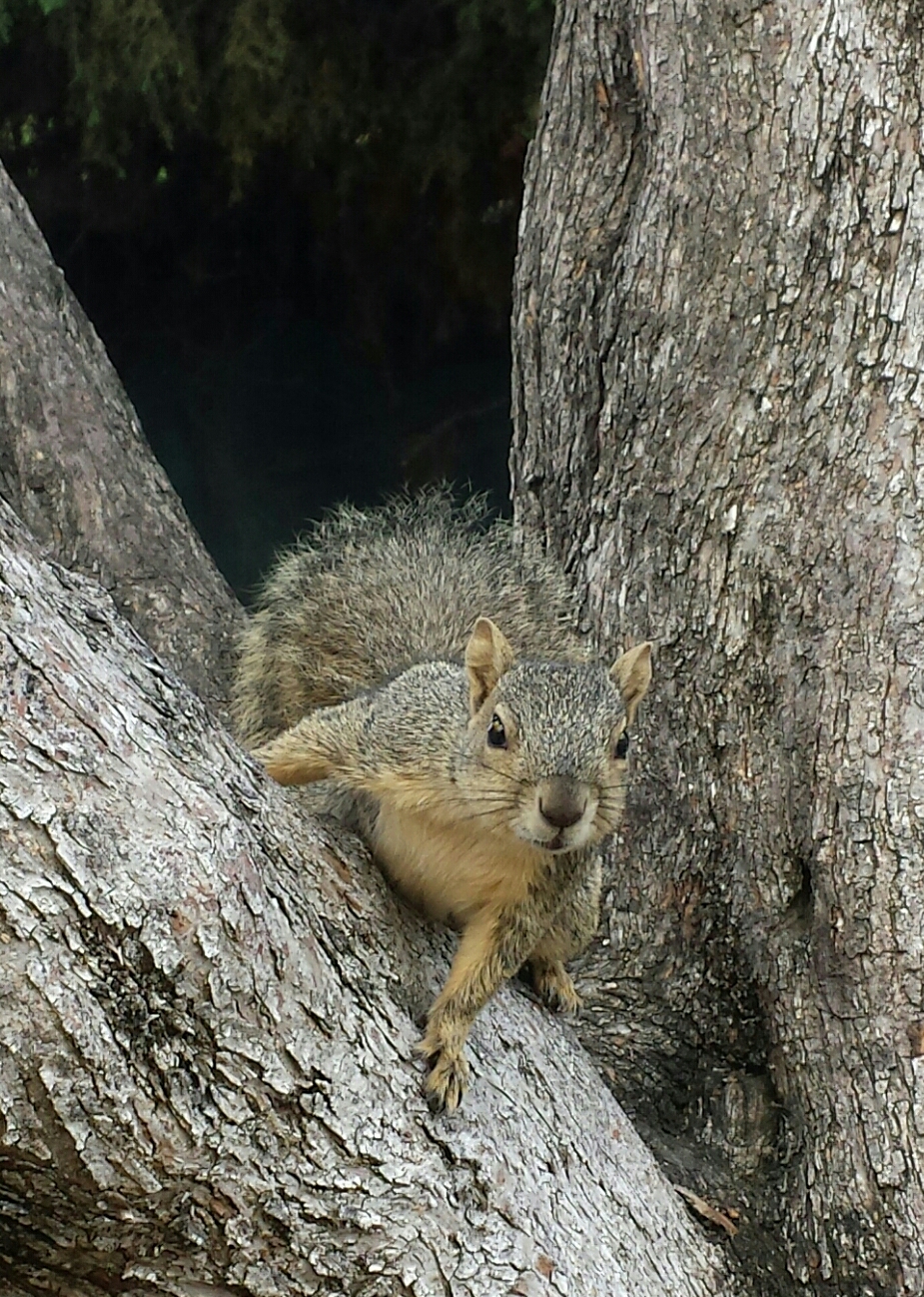
  • ·         Squirrels
  • ·         Learning something new
  • ·         Running in to an old friend
  • ·         Stumbling across a favorite something you haven’t seen in a while
What does your list look like?

Monday, December 12, 2016

People Are Not Meant to be Like Oysters: Reflections on Scrooge

I collect editions of Dickens’s A Christmas Carol. It’s one of my favorite stories. I collect film versions and print versions and even have the audio cds of Patrick Stewart’s one-man version in my car. I love it. And by this time in the season, I’ve usually seen or read it a couple times already.

I love how awful Scrooge is at the beginning, and how some of the clear, crisp images Dickens uses to describe him stick with me and ring in the back of my head when I meet people who bear him a resemblance. “Darkness was cheap, and Scrooge liked it” could be good or bad, really, but in Scrooge’s case, it’s bad and associates him with dark-heartedness and meanness, not just frugality. He was “solitary as an oyster.” He was closed off from the world, utterly alone, and practically hermetically sealed against companionship. Poor Scrooge. His greed supplanted his humanity. His need to amass wealth cut him off from all his friends and family. I can’t imagine a life more wasted.

I love that there are three spirits who visit after Marley—it’s such a lovely, fairy-tale truism that we have to think about the past, the present, and the future, that it takes three times to work the charm. The fact that the past is sad and the future is completely wretched if he stays this course is broken up by some of the most wonderful scenes of joy and contentment. The present is beautiful—it’s more than enough to make up for the past—but he’s missing it.

Most productions and abridgments choose to cut here. Dickens really lays it on thick, though. Scrooge sees the Cratchits, of course, and their small but satisfying feast. He sees Bob’s eldest daughter, Martha, come home and begin to play a trick (that she can’t make it home for Christmas) that she cuts short because she can’t bear to see her father sad, even for a joke. The middle children are described as being “up to their eyeballs in sage and onion,” and the Christmas pudding is described with such detail, I’ve kind of always wished I were British. He watches the family sing together and pass around the proverbial cup of cheer. It is a vividly depicted, sentimental, and I find, utterly charming scene.

But it doesn’t stop there. Scrooge gets a tour of London, stops at his nephew’s, flies out to sea and finds sailors and near solitary lighthouse workers sharing meals and stories and being variously contented on what feels like a cellular level. All of this is happening all around Scrooge, every single year, and with his scope tightly trained on making more and more money, he has not seen any of it.

When medieval priests described the Seven Deadly Sins, they offered contrasting virtues that one could practice to overcome, or “cure,” a sin. Practicing humility is the answer to pride; diligence cures sloth, etc. But for greed, there is no cure, only a “relief.” One can practice mercy and generosity, but they will only relieve the symptoms; nothing really gets at the root of the sin. The medieval implication is that greed is the one sin that will not be overcome.

But here is Dickens, and Scrooge, proving them wrong. I think it’s not just the fear of dying unloved and unmourned that gets him. By the time he gets to the third ghost, he’s mostly cured. The real action is with the second ghost, the Ghost of Christmas Present, who reveals to him the warmth and love all around him, that he’d been sealing himself off from, like his little oystery self. All he has to do is peel open that shell. And he does. The spirits pull back the veil and give him a glimpse of what he’s missing, and he is so stirred by the sight, he wants it badly enough to change. His first, stuttering attempt at singing a Christmas carol is a delight. He literally finds his voice and learns how to use it. (This may be my favorite moment in Patrick Stewart’s version!) It’s a beautiful thing.

Here’s wishing all you lovely readers find some holiday miracle that makes you want to sing and share and love.  (That's Lucie, my cat, by the way, named for an entirely different Dickens hero.)