Monday, July 3, 2017

Rapunzel Tales, or the Fear of Letting Our Daughters Grow Up

The idea of a daughter contained has appealed to many parents over the centuries. In Greek myth, King Acrisius of Argos locks his daughter Danae in a box when an oracle tells him his grandson will kill him. Rather than let events unfold as they might, where his daughter normally would marry someone from another town and go live with her new family, assuring that any grandchildren grew up well away from him, Acrisius acts on his fear and walks right in to the prophecy, as so many do. 

He imprisons Danae in a chest and Zeus gets in by trickling in through the cracks as a shower of gold, landing in Danae’s lap. The metaphors abound. The short-sighted father, in trying to keep his daughter off the marriage market, has as much luck as one does avoiding a sunbeam. Danae gives birth to Perseus, who much later and in an accident completely unrelated to his feats of daring, kills his grandfather with a stray discus at an athletic event. 

This image of locking away daughters, then, has old roots, and sometimes it is the father who is unwilling to let his daughter grow up. There is a medieval French tale called "The Miller and the Two Clerks" (famous now because Chaucer tweaked it for his “The Reeve’s Tale”), where a father locks his daughter up in a bin each night within his own one-room house to protect her virginity. That fails too, of course, in this case hilariously, when the daughter is convinced to let in a house guest on the grounds that he has a magic ring capable of restoring her virginity.  He neglects to tell her he picked it up from her father’s own fireplace moments before. In any case, the Daughter in a Box trick fails.

And then we get to the tower stories. Many European variants on this tale exist, and many of them make this a woman’s problem. It is, of course. Mothers worry about their daughters and about losing them to marriage. But the Grimms’ version and some Italian versions (“Beautiful Angiola” from Sicily and “Filagranata” from Rome, for instance) change the imprisoner to a witch. The witch possesses something a woman wants—something from her garden that the woman is willing to risk anything to obtain. And the witch, who has no child, wants the baby daughter whom she demands in compensation for theft. In the Grimm version, Rapunzel's father fetches lettuce for his pregnant wife, but in "Angiola," the woman and her friends are plundering the witch’s garden before anyone is pregnant, and Angiola is the price her mother pays, some time later, for her thievery.

So something has shifted. The concern of an over-protective father (either for his own sake or for economic reasons—the miller, of course, can marry his daughter higher up the social ladder if she is a confirmed virgin) has shifted to a witch or ogress who has no daughter of her own. The witch protects her as well, but as much from her family as from the world. In these versions the maiden is imprisoned apparently indefinitely, as the witch who imprisons her shows no sign of relenting. In these tales there is no hope of the maiden ever being let go. It goes some distance toward indulging maternal fear to imagine a way to keep a daughter safe from the world, but to make it a witch who orchestrates this shows how unnatural and cruel it is.

But of course, with the inexorability of Acrisius stepping in to his fate, the world comes to Rapunzel if she can’t go out in the world. A dashing prince happens by, or in the recent Disney film, a dashing thief with a complex past but one more than capable of true love, and the maiden’s society, which has been limited to one, doubles--her world explodes. Whatever trials and drama ensues, the process has begun:  Rapunzel embarks on a process of self-discovery that, despite the witch’s best efforts, leads her in to the world, never to return. 

In some ways, the maternal fear is confirmed. But in others, the natural cycle of birth, maturing, and starting a new life, even a new family, is a promise made good.  That’s the problem with kids: we can’t keep them forever. They are not for keeping—not in a box, not in a tower, not at all. They are for loving and raising and letting go.


[By the way, the best collection I’ve seen of Rapunzel tales is in the Sur La Lune collection, edited by Heidi Anne Heiner. And today's image is from the Barbie Rapunzel movie, which adds dragons and a magic paintbrush. Hooray!]

Tuesday, June 27, 2017

Raising Readers

Summer is birthday season when you’ve planned kids on an academic calendar. This summer my “baby” turns 15, which is a kind of weird, arbitrary-sounding milestone (for a non-Latino family), but for this literacy-minded mama, it matters. It turns out that as children learn to read, it helps their fluency and vocabulary-building to read to them aloud. The benefits last at least until they are fifteen, when their visual vocabulary catches up with their aural vocabulary.

Kids understand more of what they hear than what they read on their own until they are fifteen. (I think I first got this number from Jim Trelease’s The Read-Aloud Handbook, but I’m having trouble putting my finger on the reference just now.) The number, though, stuck in my head for years, and it makes sense to me that kids’ aural vocabulary (what they hear read in context, one presumes especially from a reader who reads with fluency and drama, so that the sense of new words can be gleaned from the context) is greater than their visual vocabulary (what they read by themselves) until they are fifteen years old.

So until 15, parents have a real, practical reason for continuing storytime.  I didn’t make this felicitous date with the little one, incidentally.  Regular storytime pretty much ended when she started high school and felt herself burdened with homework nearly every night.  (I’m not indulging my curiosity about how her homework load was so much more burdensome than her brother’s just two years before… with the same teachers and same assignments….  He had plenty of time for our evening reading, which means we kept going until he was 16 and she was 14.) 

At any rate, now I don’t have to feel guilty any longer.  I didn’t really feel guilty. She’s ten times the reader I was at her age, and my goal was always to hook them on reading, not just hit an important date. Mission accomplished on both counts. They both read a considerable amount for pleasure, even in the age of video games, and since her eleventh birthday, my daughter has asked primarily for books for her birthday. I call that a win.

It’s her birthday coming up, so her reading journey I’m interested in tracking here.


In the picture book days, we read around an hour a day to her.  She loved Where’s My Teddy by Jez Alborough, which we had in an oversized board book format, perfect for propping on laps and reading together. It’s adorable, so I never minded reading it four times in a row. (One fear I always had was that they’d love something I hated, and I’d have to suffer through the same drivel a hundred times.  Reader, beware of this—read books before you introduce them to wee ones, who thrive on repetition.) When she learned to read (and she was well in to first grade), we scaled back to a conservative 45 minutes a night, and there we stayed, nearly without exception, until last summer. 

Scholastic Book Club became my best friend. They have so many economical books, and you contribute to the teacher’s library too--everyone wins. She plowed through Daisy Meadows’s fairy books and Holub and Williams’s Goddess Girls series on her own, while we read a bit above her level at home—Percy Jackson, Harry Potter, Peter and the Starcatchers. We also made a point to read things she might struggle with on her own—British books like The Wind in the Willows, The House at Pooh Corner, The Hobbit, and classics like Treasure Island, 20,000 Leagues Under the Sea, Peter Pan, Alice in Wonderland, and A Tale of Two Cities.  For some of these, she benefitted from having a mom who taught those books, but far more of them, we discovered together. I wouldn’t have traded this time for anything in the world.  

And as she advances through high school and in to adulthood, requesting Barnes and Noble giftcards for holiday gifts and brandishing tee shirts with the Ravenclaw crest or slogans like “The Book Was Better,” I take some consolation for the loss of storytime.

Monday, June 19, 2017

Summer Reading 2017

Younger me would never have stooped to reading anything but fiction or literature over the summer. As a student, of course, I spent much of the year reading what people told me to (with the caveat that I had some control over the classes I took). Summer was a time to read exactly what I wanted, which was a steady diet of classics and pulp like a literary salad.  No biography—who needed real people when imagined ones were so much more interesting, and no non-fiction—does that even count as reading? 

Now in my mid-40s, the reading lists are changing.  There’s plenty of fiction, but more of it is modern (gasp—even contemporary—by LIVING authors), and I spend my days making connections from them to the past texts they make use of. And I am gratified that we keep re-using the same tropes and heroes.  There’s a Young Adult Odyssey, for instance, called Love in the Time of Global Warming (a double homage—playing on Garcia-Marquez’s Love in the Time of Cholera as well) by Francesca Lia Block, as well as Margaret Atwood’s Penelopiad and Carsten Jensen’s We, The Drowned, which also feels reminiscent of the Odyssey.  We really can’t go forward without looking back, and all those years reading old stuff is paying off for me in spades.

What’s more interesting, perhaps because I didn’t see it coming, is the non-fiction.  How much, after 22 years of teaching college English, I appreciate a well-wrought essay.  How endlessly interesting the world is, right here and now, without going to Narnia or Middle Earth or the forest of my beloved fairy tales.  How compelling research about the brain is, both for how I can teach better, and how I can learn better.  It’s a big world, and I’m grateful for the time to give more of it my attention.

This summer’s reading list is a hodge-podge, then: 
1.       Neil Gaiman’s Smoke and Mirrors because I haven’t read enough of his short fiction.
2.       Al Franken’s Al Franken, Giant of the Senate because I’m more political than ever, and        that means I really need a laugh.
3.      Gabriel Wyner’s Fluent Forever because I’m determined to keep learning languages, and     I can’t afford to move to Europe for five years.
4.      Margaret Atwood’s Penelopiad because just because I talked about it doesn’t mean I’ve       read it.
5.       George Orwell’s A Collection of Essays because damn, that guy could write.
6.       Nan Shepherd’s The Living Mountain because apparently I now enjoy nature writing.           Who knew?
7.       Georges Perec’s A Void because any novel written without a single ‘e’ must be quite            something.
8.       Octavia Butler’s Parable of the Sower because John Green recommended it some time       ago and I’ve never gotten around to it.
9.       Isidore of Seville’s Etymologies because they are the basis for so much, and because his    imperfect knowledge of Latin gives me hope.  Best find at Kalamazoo this year!
10.    Italo Calvino’s Palomar in Italian, because that is the point of learning Italian.

More will trickle in (certainly some murder mysteries, which are my pulp of choice), and some may well fall out.  But that is the way of summer, as I experience it.  What’s on your reading agenda?


Monday, June 12, 2017

The Little Things are the Big Things, or Thanksgiving in June

Graduation always makes me happy. It’s the best day of the year, as far as my job is concerned—the day we work toward with each class of students, our main reason we do what we do. If faculty do their jobs and students do theirs, the result is Graduation Day. And it’s glorious.

It’s also Big. It’s often the biggest day in a student’s life so far, although we certainly have plenty who have had wedding days or children’s births, or some other Big celebrations, but by and large, it’s a milestone. It’s a time to be proud of hard work and perseverance and a time of excitement (and anxiety) about the future. 

In some very concrete ways, we’re taught to measure our life out in these Big Things, as if there’s a checklist everyone’s privy to. High School? College? First big job? First promotion? First car? Marriage? First home? Children? 

With a laundry list like that to check off, young people might well be intimidated, might be inclined to feel lesser if they miss one or two or five of those accomplishments. 

I’m here to tell you not that the Big Things are a lie, but that you can make your own list, and that you shouldn’t get hung up on it.  The Big Things are the frame of your life, the dots in the connect-the-dots image of you.  But the Little Things—that’s where you live.

And if you stay focused on the Big Things, you miss the Little Things.

It’s a balance, of course, as all things are.We have to pan out, like Ansel Adams, and see the big picture, how we want the shape of our life to look. But we can’t dwell there. Most of our lives are spent in the middle ground—dealing with people and surroundings we encounter. I’d like to advocate for as many close-ups as you can squeeze in—attentive moments where you really see how full of wonder the Little Things are. 

Here is an underwhelmingly incomplete list of Little Things that I have come to see as Big Things in my life.  It’s just a matter of changing your lens. Have fun out there.
  • ·         Hot tea on a cool morning
  • ·         Sleeping in
  • ·         Sunscreen
  • ·         Walking dogs
  • ·         Thank-you cards
  • ·         Yogurt pretzels (sweet and salty, creamy and crunchy—what more can you ask for?)
  • ·         Dogs who pose for portraits
  • ·         Homemade bread
  • ·         Goodnight kisses
  • ·         Poems
  • ·         Tweezers
  • ·         Card games
  • ·         Used books
  • ·         Snail mail
  • ·         A good murder mystery
  • ·         Family photos
  • ·         Crossword puzzles
  • ·         Wildflowers
  • ·         Handmade cards (anything handmade, really)
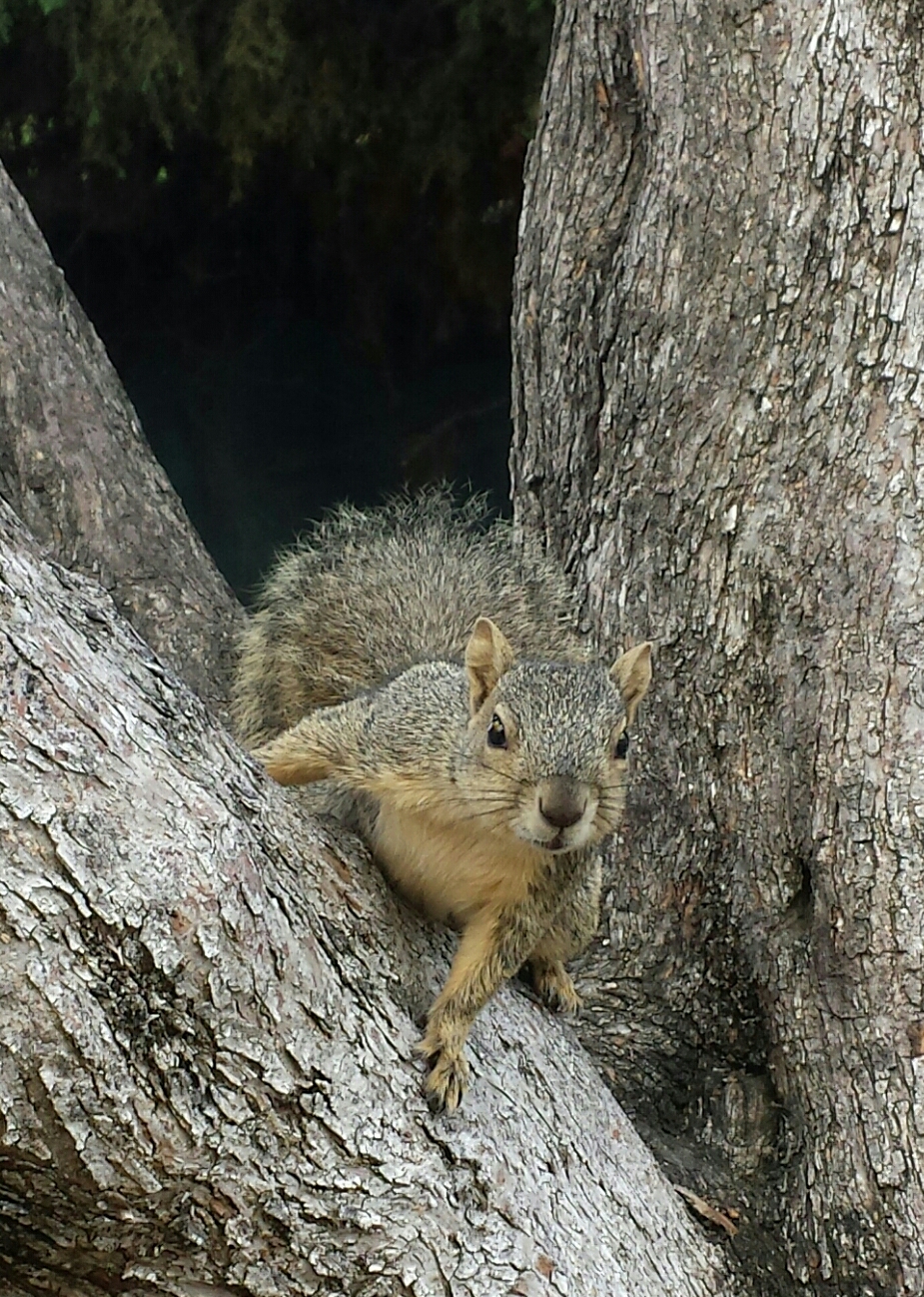
  • ·         Squirrels
  • ·         Learning something new
  • ·         Running in to an old friend
  • ·         Stumbling across a favorite something you haven’t seen in a while
What does your list look like?

Monday, June 5, 2017

Confessions of a Word-Hoarder

I am a philologist.  But let me explain what I mean by that, because we’re not all in agreement.  Dictionary.com has three definitions, one that is first and “current,” a second it marks as older, which actually means quite another thing, and the third, which it lists as “obsolete” and is the one that I claim.  Of course.

The word comes from the Greek roots meaning “lover of words.” Philo-logos. This means in its oldest form, it could refer to people who study (and love) language or those who study (and love) literature, that which we make from words. 

The current definition falls on the side of literary, but not in the sense we think of; it means literature scholars who act as sleuths, trying to place and date texts given the raw data of what appears in a manuscript or other text.  The “older” and therefore outdated meaning is the other side of that coin—historical linguistics, essentially, or the study of ancient sound systems and grammars and theories about how language changes.

Linguistics and literature go hand in hand for me and always have.  One must understand the language in order to read the literature, of course.  When I graduated from my undergrad institution, it was with a double major in English literature and French language. I knew I wanted to focus on the medieval period, and I looked everywhere for a graduate program that would let me do both literary and linguistic study (by which I meant historical linguistics and language study).  I didn’t find one. 

Instead I found a wonderful linguistics program in a department with four medievalists, and I started in linguistics (for two reasons, really: 1- I was still laboring under the notion that the more scientific-sounding the degree, the better, and 2- I wanted to learn the languages and how they changed, so I could really dig in to the literature).  “Historical Linguistics” as a field, I was told on my very first visit, was dwindling, but I could certainly pump up my linguistics degree with medieval language classes. 

Everyone felt my ill-fit.  In linguistics classes I brought up literary considerations, and in literature classes, I asked about the translation and original language.  My thesis for my MA in linguistics was really very literary, and I had to add one long, discursive, decidedly linguistic footnote to demonstrate my skills before one member of my committee would sign off on it. 

One of my German professors laughed and told me I was born a century too late; I really belonged in the glorious 19th century tradition of German philologists, with the Grimms and others, who studied language and literature together.  That’s where that “older” definition comes from.  It used to be a thing.  But in the modern academy, we have specialized far more, and now it’s tricky to do both. 

Tricky, but not impossible.  Some programs allow one to choose two specializations.  Comparative Literature programs always include instruction in multiple languages.  Or you can choose my way.  Get a degree in linguistics, and then get another in literature.  My way is not time- or cost-effective, but I wouldn’t change a thing. 

Some famous philologists you will have heard of include Jakob Grimm and JRR Tolkien.  I do not pretend to rank myself with them, just to ally myself on the grounds of similar affections, as a lover of words.

(The image is of the first page of Beowulf in the Cotton Vitelius A.xv manuscript, now housed in London's British Museum.)

Monday, May 29, 2017

Handwriting can be crafting too!

I love writing. Not writing blogs or stories or poetry (although I love those too!), but the act of writing—of forming letters. I think text itself is beautiful. 

This is a useful trait for a medievalist, I suppose, as decoding letters and transliterating text is easier if you also think it’s pretty, but today I’m really just talking about handwriting. In a world where some states are taking cursive writing out of schools, lots of things will end up looking like calligraphy, no? 

This means I’ve spent and continue to spend some time on my penmanship. My dad was an architect, and architects used to have to learn a particular script, so anyone could read the blueprints. (They don’t teach this anymore, incidently—another skill lost to the computer age.) I learned that blocky script from him, and by 5th grade I went the opposite direction; I decided I needed to have some distinctive features in my handwriting. I practiced pretty lowercase f and s and uppercase H and made them part of my repertoire. I was a geek. 

I still am. Now I practice “lettering” with brush tip pens and online tutorials. I still think writing can and often should be pretty. As with any skill, it comes with practice, and I hand write a lot. I still take notes longhand (not that they’re elegant, but it counts), and keep journals around to jot things down that I need to remember or I need to write about. 

My son found one of these journals recently. My son has many fine qualities, but his handwriting is atrocious. At some point even I caved and suggested he type his homework. But occasionally I try to encourage him, and truthfully, his writing is getting easier to read. On the way home from karate the other night, where I had been scribbling in my journal while he practiced blocks and strikes, he picked up the journal and started flipping through.
 
I asked him if he could read my scrawl, as I knew I’d been writing fast. “Kind of,” he said, but it’s weird because it’s a mix of cursive and printing.” Guilty. This was interesting to me. Did he really process cursive differently, so that it was jarring, slowing him down to sort of switch systems in the middle of a word? Is that a kind of dyslexia?  (His dad is mildly dyslexic.) Surely not. Maybe? I pressed him to discuss.

When we got home, I asked him to show me the passage he’d been reading. Ah…  Out of around 40 pages of text, my kiddo flipped to the one page I had written in Middle English. Yeah. That’s harder to read, but not because of my hybrid script. Too many letters, and not all of the right ones. Enough to make you feel dyslexic, maybe, if you weren’t expecting it.

Which brings me back to scribes and medieval writing. (Was I there? Only briefly.) Medieval scribes sometimes copied texts in languages they couldn’t read. Think of the possibility for errors! And even if they could read the text, “copying” needs to be in quotes, as they frequently changed the spelling on purpose or without thinking. They were human, just like we are.


And writing is a uniquely human act.  Maybe that’s another reason I want to give it its due.  To honor and appreciate the act of writing, the medium through which we convey our ideas.  And one I’m not prepared to hand over entirely to the machines.  

Monday, May 22, 2017

Naming Nature (An Aspect of Reading the World)

I’m back from Michigan, and had a lovely conference: lots of good ideas bubbling up and rolling around and getting hit back and forth between people like ping-pong balls. But it’s also in Michigan, in the springtime at a campus on rolling hills and deciduous forests just waking up, and it’s always beautiful. 

This time someone had the (friendly) audacity to point out that my pictures were of the trees, not the conference panels, and I was forced to acknowledge that part of my draw is to the woods; part of my time is spent sitting and walking outside.

It’s a medieval studies conference, so part of my imagination is always charged with that kind of life: I went to papers about Germanic myths and medieval material culture, so as I carved a path through the trees or took the one someone left for me, I felt a bit of that other world, living closer to nature than we do today. Certainly Michigan is no Scandinavia, but it shares enough for this Californian to have it work on my thoughts. I especially love taking pictures, finding plants I can identify, and plants I don’t recognize:  reading the forest. 

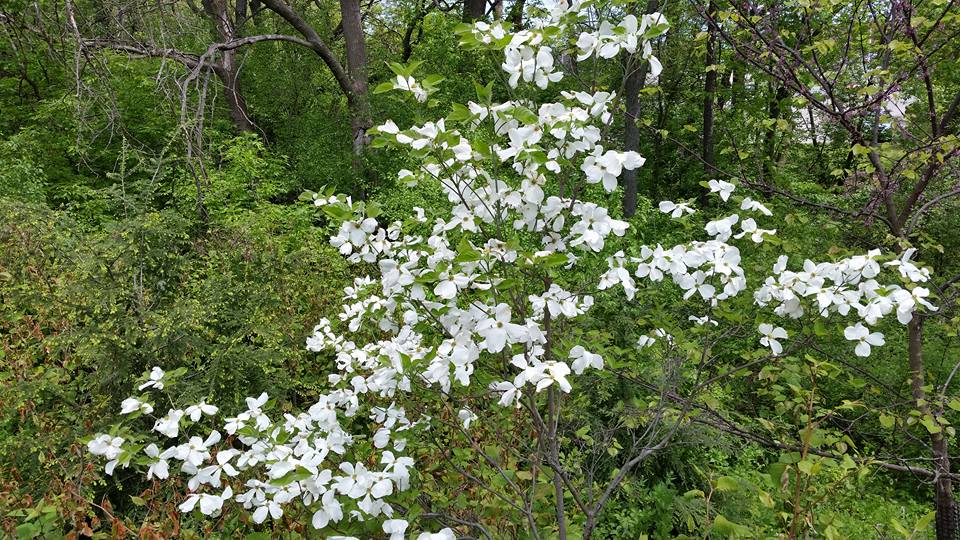
Dogwood has been one of my favorite flowers since I was a child. My grandparents lived in Oregon, and Grandma loved Dogwood. I used to ask why there was Dogwood, but no Catwood, and finally concluded that there were wolves in the forest, but no lions, so that must be it. Grandma’s Dogwood tree was a Pacific Dogwood (Cornus nuttalli), and this was Flowering Dogwood (Cornus florida), but it still counts. They’re related, and the name indicates that.

It’s the names of nature I’m thinking about today. I bought a book about the character of Natura in the Middle Ages, so more will be coming about the grand idea, but Sunday there was an article in the New York Times about Carl Linnaeus, the Swede who invented the system of binomial nomenclature—the reason you can read the difference between Cornus nuttalli and Cornus florida on the page, and not just on the petals, so that’s the direction I’m headed today. Back to Scandinavia. Back to the woods. Back to the ways we bridge the gap between what we know and how we know it, by turning the world in to words. 
James Prosek, who wrote this article on Linnaeus, is working on a book “about how and why we name and order the natural world,” and his piece in the Sunday Times is a brief account of his retracing Linnaeus’s steps through northern Sweden:  Lapland. Linnaeus had traveled for five months, cataloging, collecting, and naming plants, and keeping a journal. Prosek followed skeptically, with a 21st century’s dim view of Linnaeus’s ego and privilege, as he ventured in to Lapland with some intent to exploit the Laplanders and some intent to name the world from his perspective. Prosek points out the flower he names after himself (Linnea borealis) as evidence of his ego, and then as he looks at others of Linneaus's monikers, he discovers a pattern. 
Linnaeus uses Latin to name his specimens, which was the language of learning in 18th century Sweden. Prosek bristles at that, but softens when he sees Linnaeus’s attempts to be precise but also evocative in his naming. One example that changes his mind is a white flower Linnaeus called Dryas octopetala because the leaves reminded him of oaks, and dryads were the nymphs who inhabited oak trees. The flower has eight petals—a dryad in an eight-paneled skirt. 

Prosek finds this charming, as do I. He notes Linnaeus’s names attempt to be “thoughtful and carry physical and quantitative characteristics, metaphor, and allusion to myth.” It’s this storytelling aspect that appeals to me. Linnaeus attempted to encounter the unfamiliar with the tools of the familiar—to describe new flora in terms he and his readers would understand, to bridge the gap between the unknown and the known by creating names that tell a story. It is the oldest and best way to teach—to engage the imagination to help people remember the facts. 
And it still works, as I sat near the forest’s edge, daydreaming about wolves and a red-cloaked girl and the Dogwood she might pick for her granny on the way to the Chaucer panel.